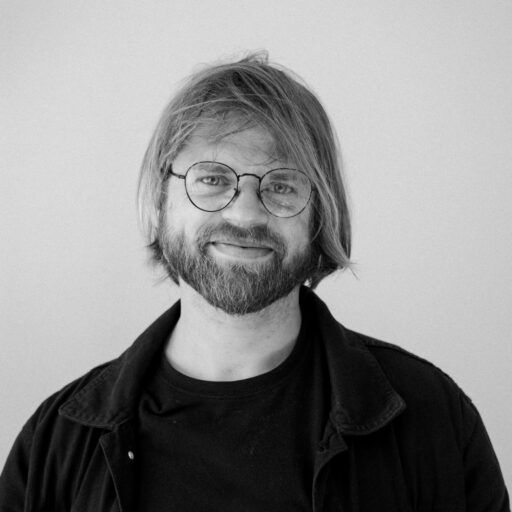
Renaud Philippe (b. 1984) is a freelance Canadian documentary photographer based in Québec, specializing in social and environmental issues, with a particular interest in subjects that are under-documented or under-represented in mainstream media. He holds a degree in journalism from Université Laval and has worked for nearly two decades documenting the impacts of war, forced displacement, and environmental crises. His current work focuses on anti-colonial struggles and environmental justice movements, with a particular emphasis on Indigenous land rights.
Between 2017 and 2019, he documented the situation of Rohingya refugees in Bangladesh, which led to the co-direction of the feature-length documentary Wandering, a Rohingya Story. He has published two photographic books: Impermanence, on the disappearance of Bangkok, and RETOMADA, a long-term project documenting the Guarani people’s movement to reclaim their ancestral lands in Brazil. Since 2022, he has continued RETOMADA with support from the Conseil des Arts et Lettres du Québec and the Canada Council for the Arts, collaborating closely with Brazilian visual anthropologist Carol Mira and Guarani community members.
His photographs have been exhibited at numerous institutions and festivals, including the Musée National des Beaux-Arts de Québec, the Bangkok Art & Culture Center, and The Guardian Gallery in London, as well as festivals such as Visa pour l’Image, the Barcelona International Photography Festival, and the Angkor Photo Festival, among others. His awards include, among others, the Iris Award for Best Documentary Film, the National Newspaper Award (Photo Essay), and two Picture of the Year International (POY) Awards.
Renaud is a regular contributor to The New York Times and The Globe and Mail. He also leads workshops, mentors emerging photographers, and speaks in educational settings from primary schools to universities.