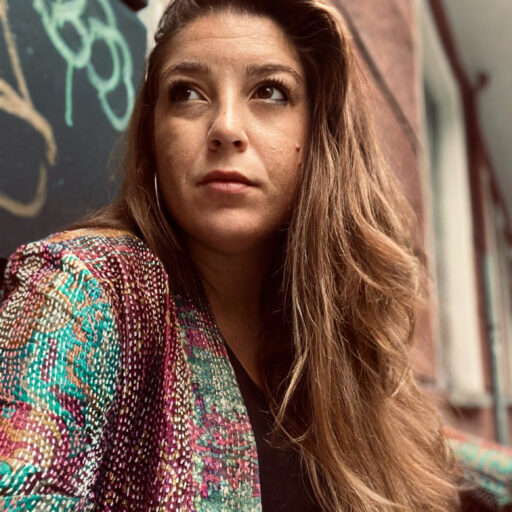
Sara Creta is a documentary filmmaker, investigative journalist, and researcher working at the intersection of emerging technology and human rights. For more than a decade, her practice has focused on documenting war crimes, forced displacement, extractive economies and systems of impunity, combining long-term field reporting with digital and forensic investigation in some of the world’s most restricted conflict and border regions.
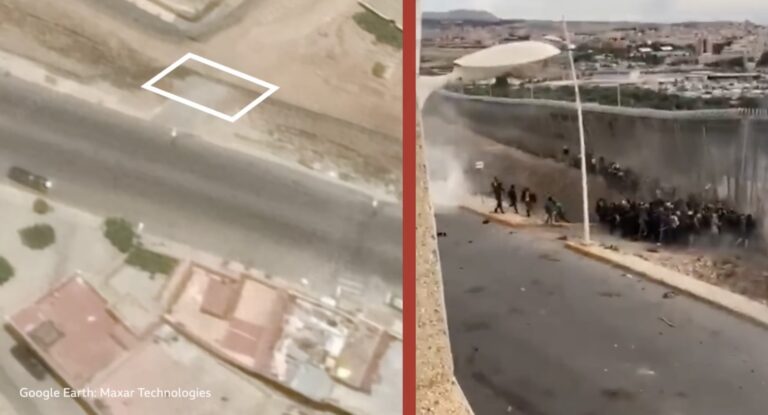
Her work in the Central Mediterranean, North Africa, and the Middle East has been instrumental in revealing the violence of Europe’s externalized border regimes. Beyond documenting the use of lethal force against asylum seekers, her investigations in Morocco, Libya, and Egypt provided a rare, visual record of the systemic abuses within illegal detention and deportation systems. Beyond Europe, she has reported from major humanitarian crises and sites of mass violence, including the Rohingya genocide in Bangladesh, protracted conflict and displacement in the Democratic Republic of Congo, and communities uprooted by Boko Haram around Lake Chad. In recent years, her investigations have expanded to examine the human cost of global drug economies in Colombia and Mexico, the environmental consequences of large-scale extraction in East Africa, and genocidal violence in Darfur.
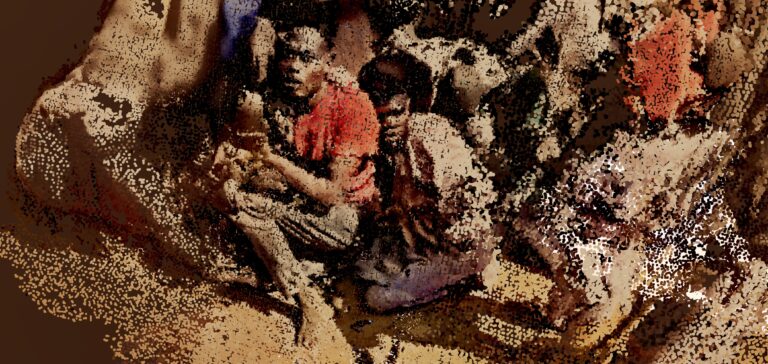
In Sudan, her work has consistently challenged the traditional lens of war reporting. Her reporting from women’s military camps for ARTE offered a rare look at the militarization of women by Islamist groups, challenging the male-dominated narrative of conflict. Much like her recent investigation for Channel 4, Inside Ardamata: Anatomy of a Massacre, which pioneers the ethical use of AI in documenting mass violence.
Sara holds a Ph.D. in Journalism from Dublin City University, specializing in access to information and internet shutdowns during conflicts, and completed a postdoctoral fellowship at the University of Copenhagen. Her recent research examines how images mediate truth, memory, and justice in contexts of mass atrocity. Alongside her academic trajectory in Greece, Italy, Brazil, and Morocco, she has undertaken advanced fellowships and specialized training at the University of Oxford’s Programme in Comparative Media Law and Policy, and Columbia University’s Dart Center for Journalism & Trauma, strengthening the integration of legal, digital, and trauma-informed approaches within her practice.
Sara’s films and investigations have screened at major international festivals and been published on networks including BBC, ARTE, Channel 4, Al Jazeera, The Spiegel and The New York Times. Her work has been exhibited internationally, and has received recognition through fellowships, grants, and awards including the Rory Peck Award, Prix Europa, Albert Londres and the European Press Prize.
Extending beyond public broadcast, her reporting provided critical evidence for international legal frameworks, including proceedings before the International Criminal Court and the European Court of Human Rights. Alongside her creative practice, she collaborates with universities, cultural institutions, and human rights organisations, contributing to ongoing debates around ethics, accountability, and the future of investigative storytelling.