
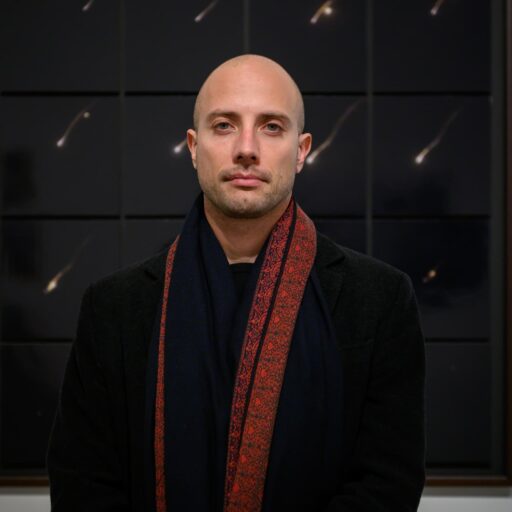
Born in Torino in 1985, Stefano Carini is a creative director, fundraiser, curator, and educator with over 15 years of international experience developing documentary photography initiatives, visual education programs, and multidisciplinary cultural projects. His work explores how visual storytelling can bridge cultures, generate dialogue, and reshape dominant narratives.
He co-founded DARST Projects, an independent platform for visual research and publishing, and later served as director of Metrography, the first Iraqi photo agency, during the conflict with ISIS. He subsequently became Creative Director of NOOR Images and the NOOR Foundation. With a background spanning photography, book design, exhibition curation, and visual literacy, Carini has led and mentored international teams across Europe and the Middle East, including in conflict and post-conflict contexts.
Over the past decade, he has also played a strategic role in developing and funding cultural and environmental initiatives, securing institutional partnerships, designing programs, and building cross-sector collaborations. His practice integrates creative direction with fundraising strategy, aligning artistic vision with structural and financial sustainability.
From Iraq to Slovenia, Cambodia to Italy, Carini has explored themes of displacement, memory, ecological transformation, and cultural resilience. His work has been presented in exhibitions such as Over My Eyes, Map of Displacement, Ripples, and Visualizing the Climate Crisis at institutions including the DOX Centre for Contemporary Art in Prague, the Jakopič Gallery in Ljubljana, and the Fotomuseum Hilversum in The Netherlands..
Aside from his work in visual storytelling and visual literacy, Carini is part of Anonima Riforestazioni, an organization dedicated to tree cultivation for ecological restoration. Within this context, he is training as a forest nurseryman and developing community-based reforestation projects around his hometown of Torino. He continues to teach and collaborate across diverse contexts – from refugee camps to primary schools – advancing visual culture as a tool for regeneration, participation, and long-term impact.